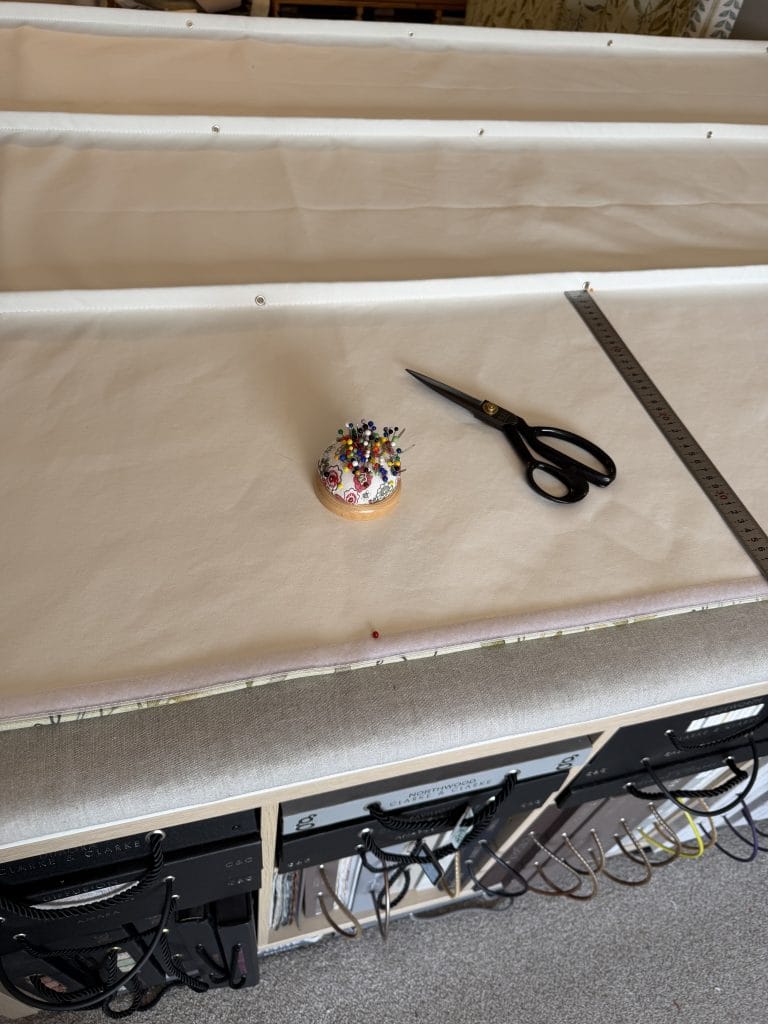
When it comes to a truly bespoke Roman blind, it’s often the details you don’t see that make all the difference.
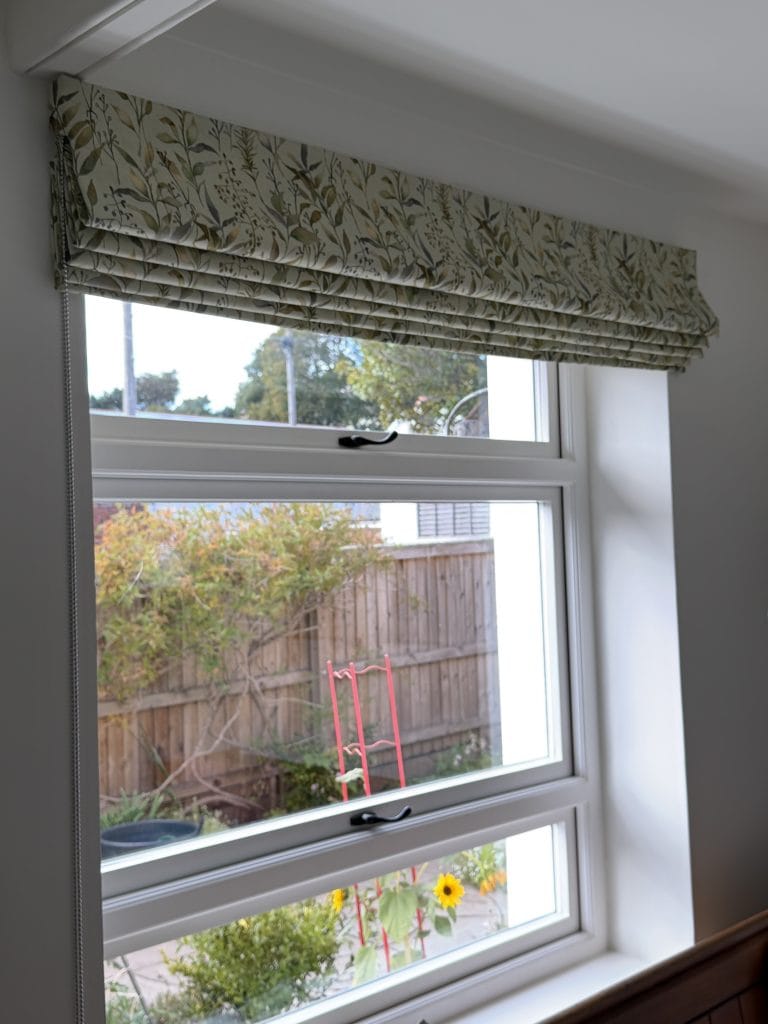
At first glance, a beautifully made Roman blind can look simple: a perfectly chosen fabric, clean lines and a smooth, elegant finish. But behind that understated appearance is a considerable amount of skilled craftsmanship. Every layer, stitch and finishing touch has a purpose — particularly when the blind is made as a blackout blind.
For us, making a Roman blind isn’t simply a case of cutting fabric and putting it through a sewing machine. It’s about understanding how the finished blind will look, behave and perform once it is hanging in your home.
Stitch-free from the face
One of the hallmarks of a beautifully made Roman blind is that the face fabric should look as clean and uninterrupted as possible.
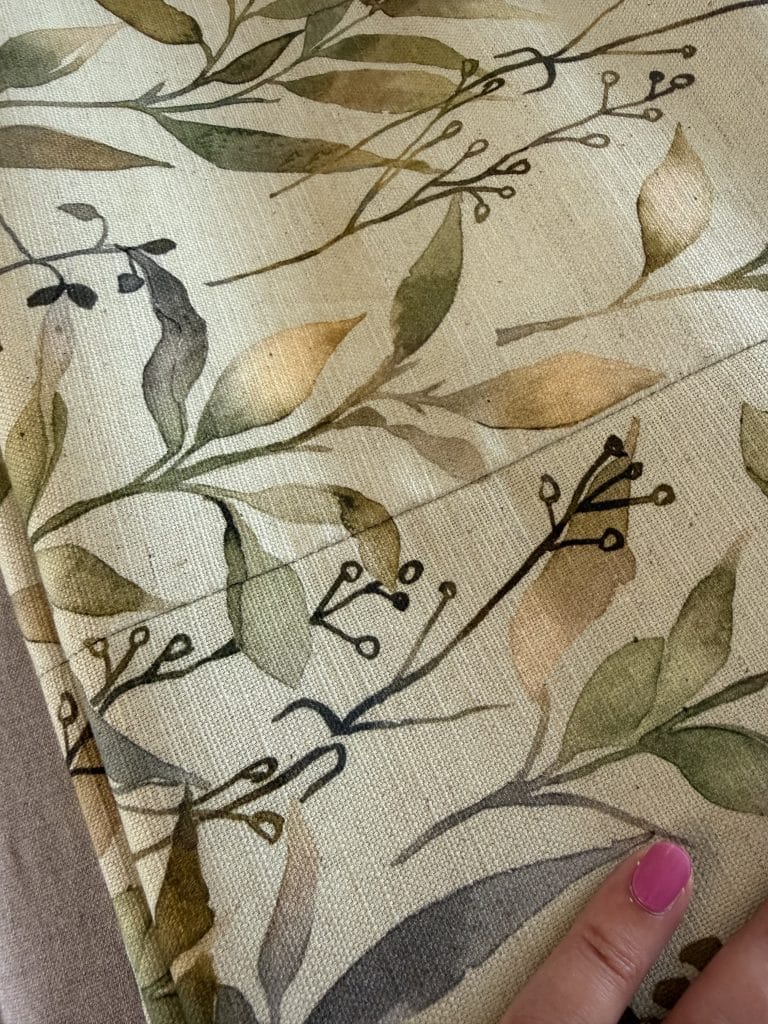
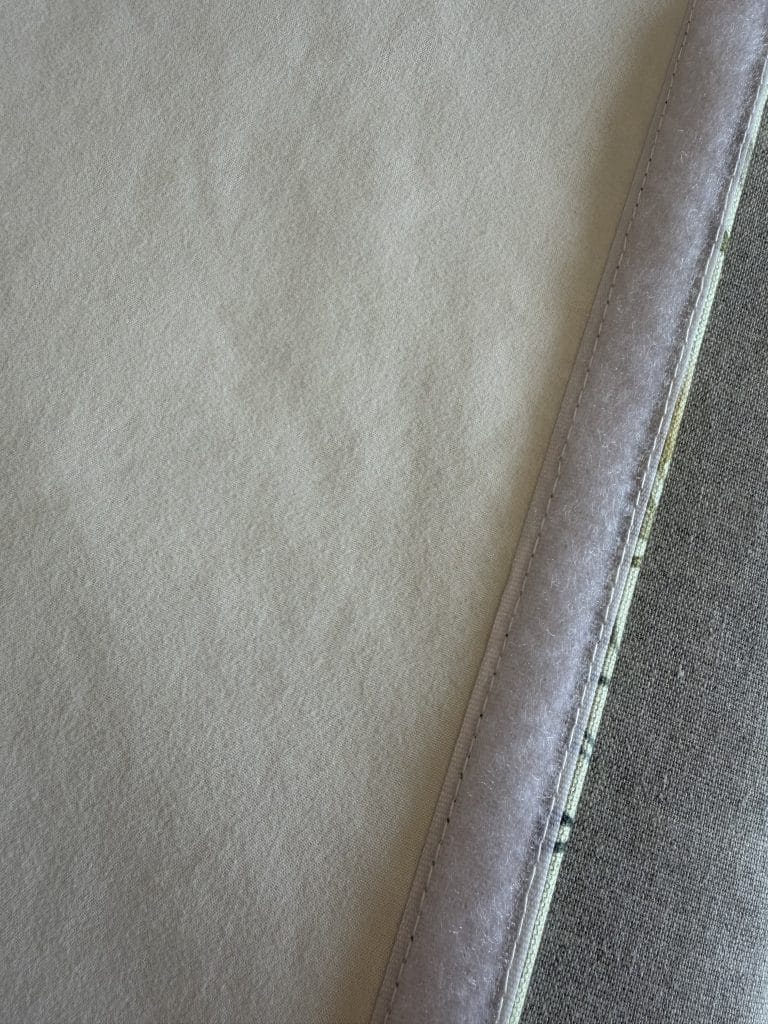
Our machine stitching is carried out on the reverse side of the blind, keeping the face of the fabric free from visible rows of stitching wherever possible. This is particularly important with luxurious or patterned fabrics, where unnecessary stitching can detract from the design.
The result is a blind that looks beautifully tailored from the room side — the fabric remains the star of the show.
But achieving that clean appearance requires more than simply hiding the machine stitching.
The craftsmanship behind a blackout blind
Blackout blinds bring another challenge: light.
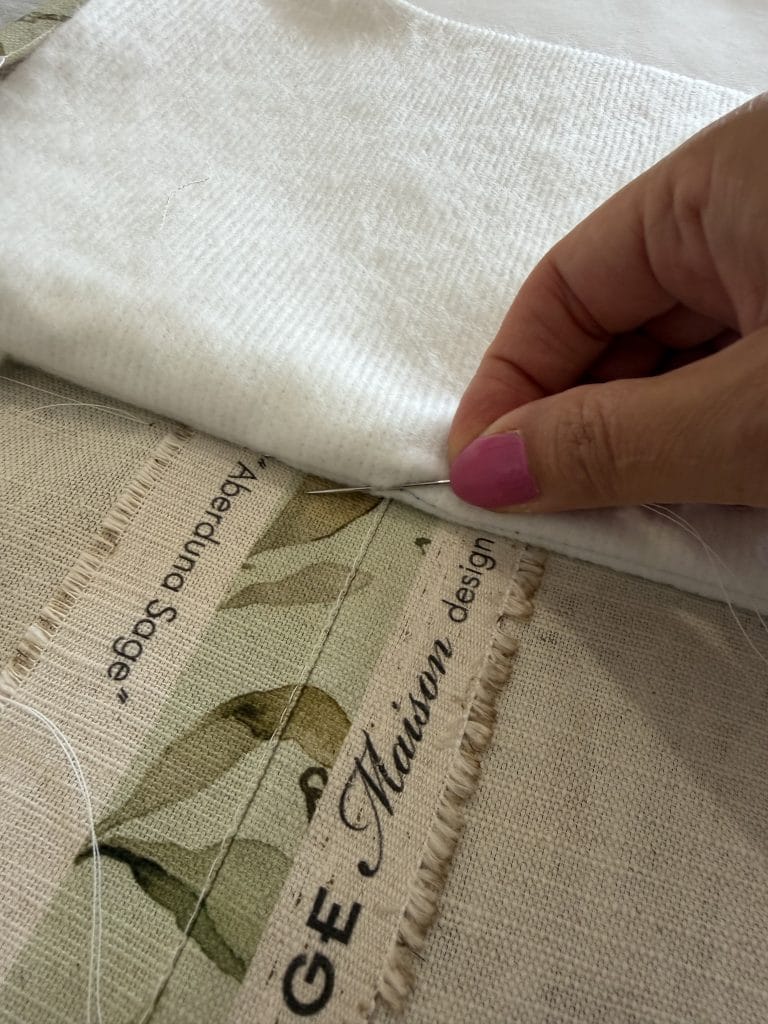
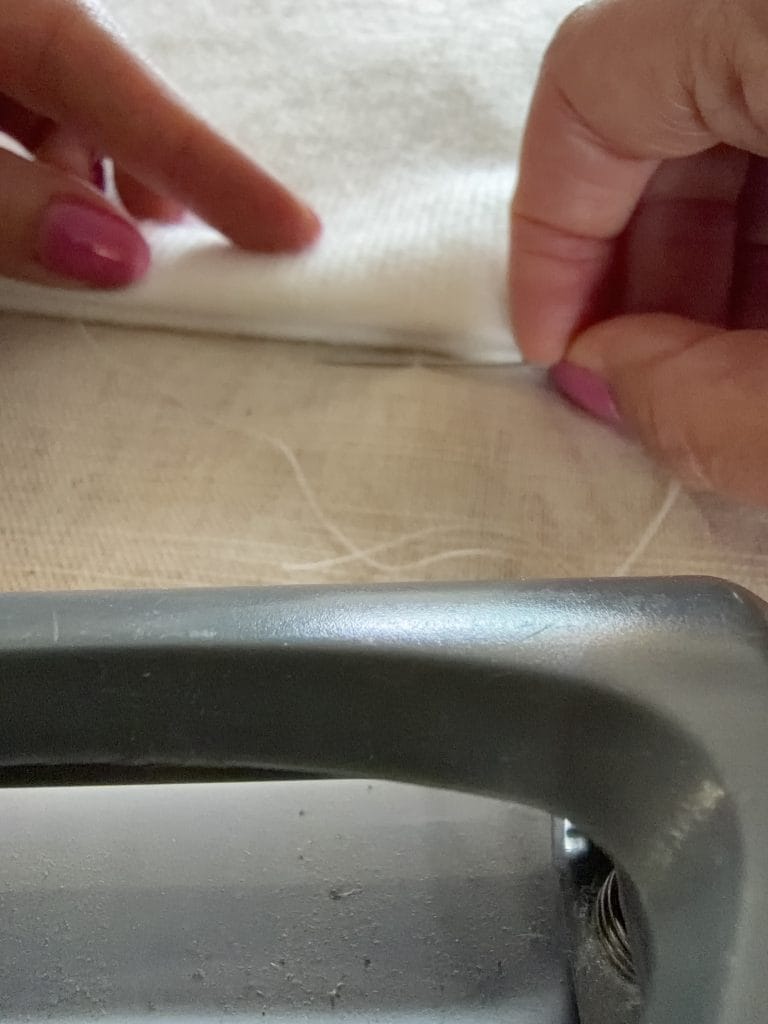
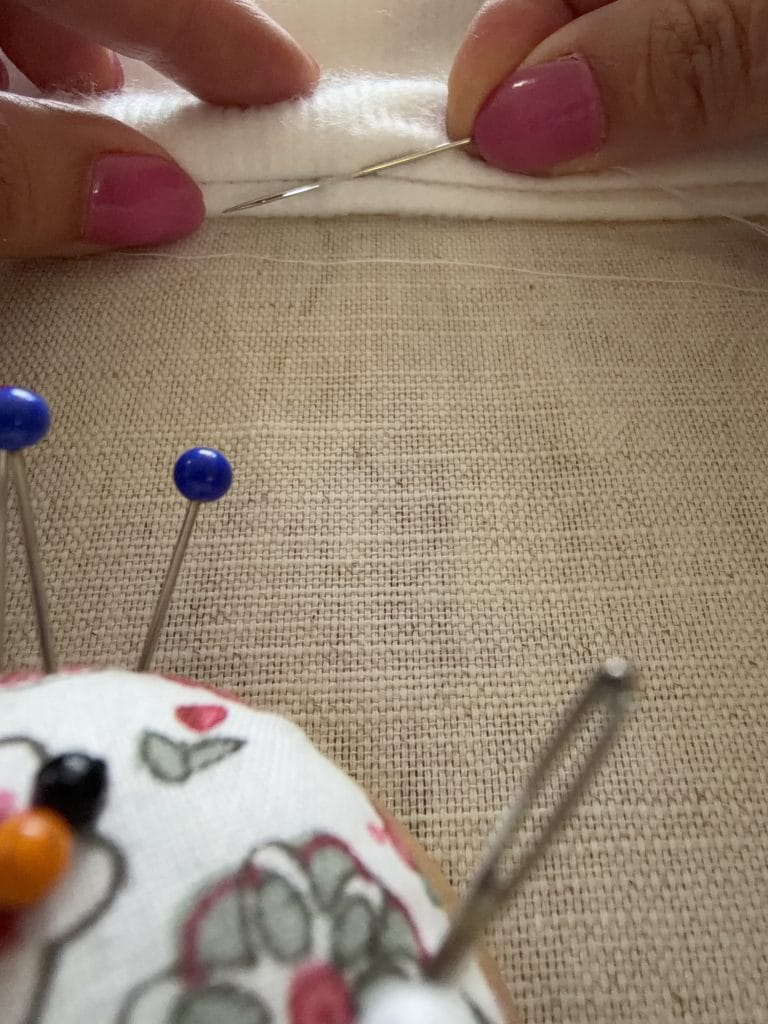
Even when the correct blackout lining is used, tiny gaps, seams and construction details can potentially allow unwanted light to show through. This is where careful hand finishing becomes so important.
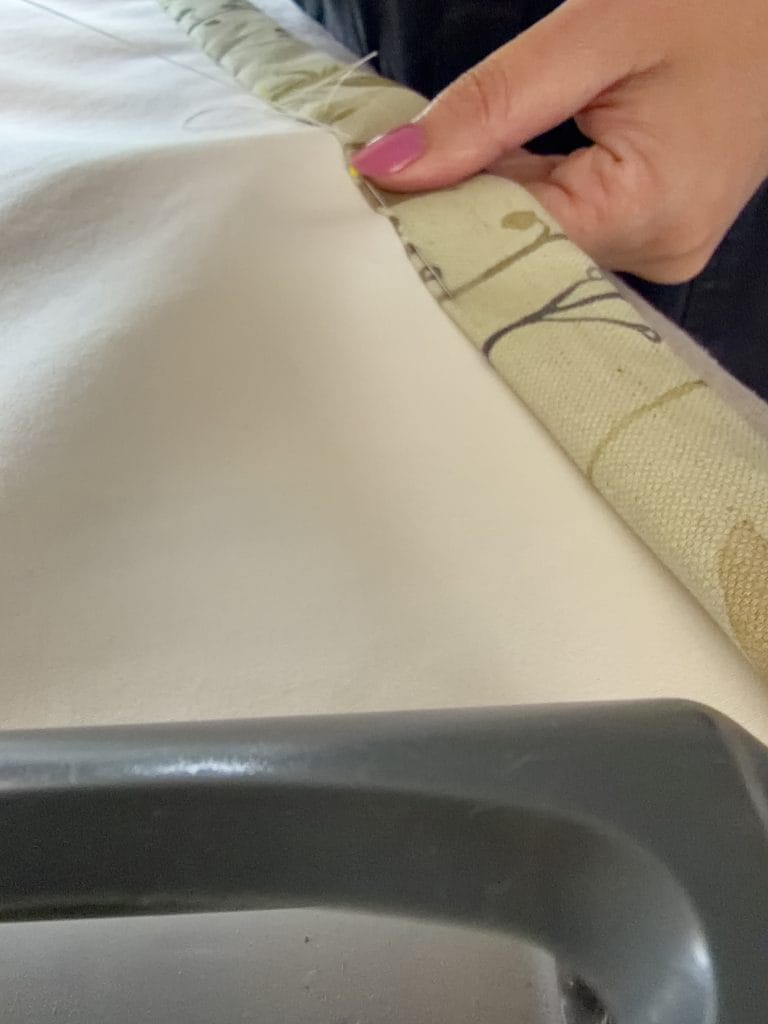
As we construct the blind, we use carefully positioned hand stitching to close and secure areas where light could otherwise find its way through. These stitches are deliberately subtle and are worked from the reverse, so that the face of the blind retains that beautifully clean appearance.
It is one of those details that may not be immediately obvious when you look at a finished blind — but you certainly notice the difference when the blind is closed and the room is dark.
The little details: ear returns
We also believe that a bespoke blind should be finished properly right to the edges.
One of our favourite examples is the addition of ear returns.
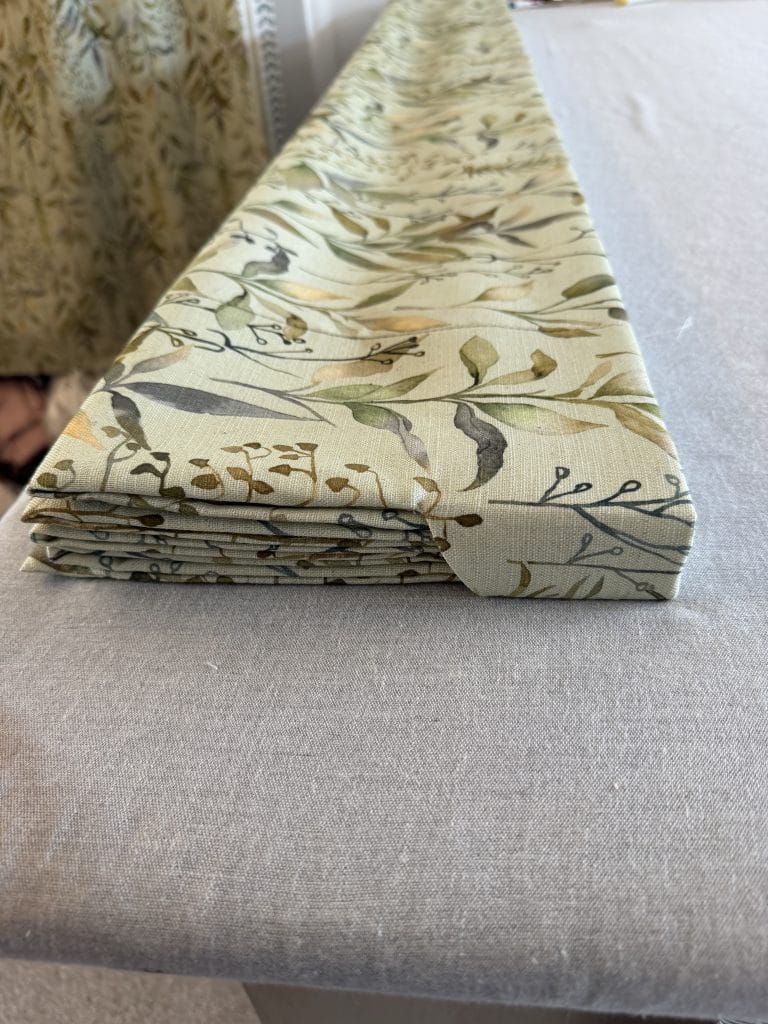
Rather than leaving the ends of the blind to expose the white track or mechanism, the fabric is carefully returned around the sides. These small fabric extensions — or “ears” — help conceal the hardware and create a much more considered finish.
It may seem like a small detail, but when you are investing in a handmade blind, these are exactly the details that set it apart.
The blind looks finished from every angle, rather than simply being fabric attached to a mechanism.
Handmade means more than just “made by hand”
There is a temptation to think of a handmade blind simply as one that has been sewn by a person rather than produced in a factory.
For us, bespoke and handmade means something much more exacting.
It means looking at the individual fabric and considering how it needs to be handled. It means making adjustments during construction rather than relying on a one-size-fits-all process. It means taking the time to hand finish areas that need that extra attention.
And importantly, it means thinking about what the customer will see once the blind is installed — not just how quickly it can be made.
Why these details matter
A Roman blind can be technically functional and still fall short aesthetically.
A truly bespoke blind should have:
- A beautifully clean face with minimal visible stitching
- Carefully concealed construction on the reverse
- Hand-finished details to help prevent unwanted light bleed
- Neatly finished edges and corners
- Ear returns to conceal the track and mechanism
- A finish that complements the quality of the chosen fabric
- The attention to detail you would expect from a genuinely handmade product
These are the things that can be difficult to appreciate from a photograph or a quick glance in a showroom. They are the craftsmanship hidden behind the finished product.
The difference is in the detail
We often find that the most satisfying part of making a bespoke Roman blind is knowing that so much care has gone into something that, to the untrained eye, simply looks effortless.
That is the nature of good craftsmanship.
The stitching is hidden. The hardware disappears. The light is controlled. The fabric hangs beautifully.
What you see is a simple, elegant Roman blind.
What goes into making it is anything but simple.
For us, that is what a bespoke, handmade blind should be: beautifully considered from the first cut of fabric to the final hand stitch.
Because when it comes to made-to-measure interiors, it really is the details that make the difference.